Wet Wipe Island: London’s battle against the wet wipe disaster in the Thames
News News blog
Over the years, a bizarre environmental problem emerged in the heart of London: the infamous ‘Wet Wipe Island’ near Hammersmith Bridge. This island of wet wipes became a symbol of environmental pollution and illustrates the consequences of improper waste disposal.
What was Wet Wipe Island?
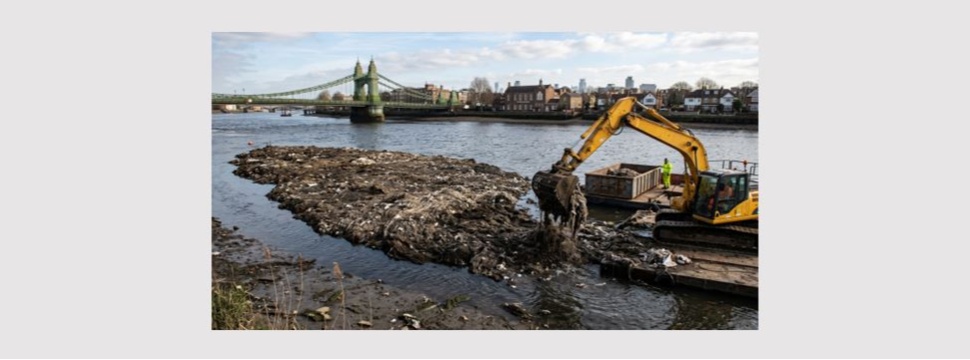
Wet Wipe Island was an artificial island made up of millions of wet wipes in the Thames. The black, fibrous mass was the size of two tennis courts and was up to a metre high in places. The bizarre formation even had its own Google Maps listing as a “cultural landmark” – albeit with ironic reviews from Londoners.
How did the wet wipe island come about?
There are two main reasons for the emergence of Wet Wipe Island. Londoners were flushing vast quantities of wet wipes down the toilet instead of putting them in the general waste bin. Additionally, London’s outdated sewerage system contributed to the problem: rainwater and sewage flow through the same pipes. During heavy rainfall, the Victorian sewer system overflows and Thames Water discharges unfiltered combined sewage directly into the Thames – along with the wet wipes that have been flushed down the toilet.
The bend in the river at Hammersmith further contributed to the build-up. The water flows more slowly there, causing the heavy wet wipes to become entangled in branches and plants and pile up into mountains.
Why was Wet Wipe Island cleared?
The London Port Authority launched a large-scale clearance operation in August 2025. Using an eight-tonne excavator, an estimated 180 tonnes of wet wipes were removed – equivalent to the weight of 15 double-decker buses.
The clearance was urgently needed because the island had altered the course of the River Thames and was causing massive environmental damage. Microplastics from the wipes were threatening the flora and fauna. The environmental organisation Thames 21 had been documenting the problem since 2017 and removing the wipes by painstaking manual labour.
Consequences and future measures
The Wet Wipe Island disaster led to several consequences. The British government announced a ban on the sale of wet wipes containing plastic from 2024, to encourage manufacturers to switch to plastic-free alternatives. The new Thames Tideway Tunnel is set to prevent 95 per cent of combined sewer overflows in future.
Environmental activists are calling for better wastewater infrastructure and public education. Thames Water is investing an additional £1.8 billion in improving river health.
The spectacular clean-up operation attracted attention through videos showing the mess on social media and is intended to encourage Londoners to dispose of wet wipes properly in future.