Book burning: when power battles knowledge
News News blog
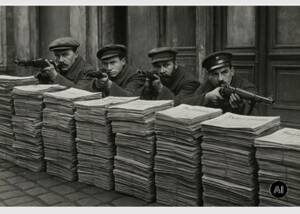
Book burning is a dark chapter in human history. They demonstrate how power attempts to suppress knowledge and freedom of expression. But why did people repeatedly resort to this drastic form of censorship?
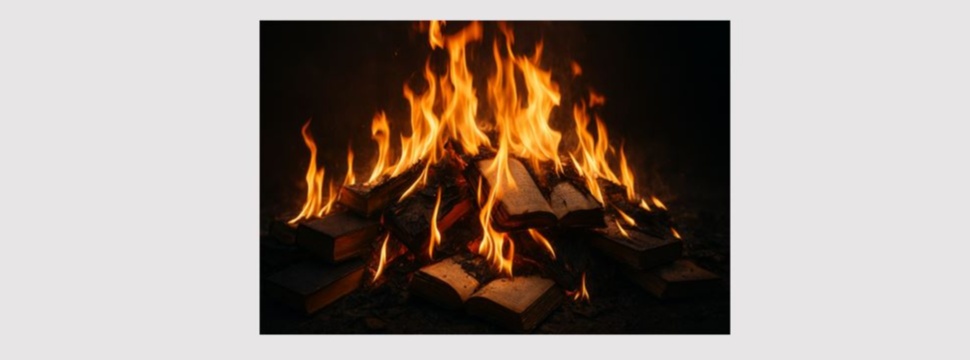
The beginnings: The first documented book burnings
The first known book burnings took place as far back as antiquity. Around 8 AD, Emperor Augustus ordered the writings of the poet Ovid to be burned. In China, Emperor Qin Shihuangdi ordered the systematic destruction of philosophical and historical works in 213 BC.
Reasons for book burnings
Religious motives
For centuries, churches burned books that contradicted their teachings. The Inquisition destroyed heretical writings and works on the natural sciences. Reformation writings also fell victim to the flames.
Ideological persecution
Totalitarian regimes used book burnings as a demonstration of power. They sought to eradicate undesirable ideas and worldviews. Democratic ideas, human rights and critical literature were systematically destroyed.
Political control
Ruling elites feared books that challenged their power. Revolutionary writings, Enlightenment literature and political criticism regularly ended up in the flames.
Famous book burnings around the world
Germany 1933
The most famous book burning took place on 10 May 1933 in Germany. National Socialists burned works by Heinrich Heine, Thomas Mann, Erich Maria Remarque, Sigmund Freud and many other authors on Berlin’s Opernplatz.
Other countries
• Chile: General Pinochet had Marxist literature burned after 1973
• USA: During the McCarthy era, citizens burned communist books
• Iran: Following the Islamic Revolution in 1979, Western books fell victim to the flames
• China: During the Cultural Revolution, Red Guards destroyed ‘bourgeois’ literature
These writers fell victim to book burnings:
• Heinrich Heine: His liberal ideas made him a target
• Thomas Mann: A critic of National Socialism
• Erich Maria Remarque: ‘All Quiet on the Western Front’ was ostracised as pacifist
• Bertolt Brecht: His Marxist plays were considered dangerous
• Kurt Tucholsky: Satirist and democrat
• Sigmund Freud: Psychoanalysis contradicted Nazi ideology
Modern forms of book censorship
Book burnings are less common today, but censorship continues to exist. Digital deletions, banned lists and import restrictions are modern forms of book destruction.
Book burnings show that knowledge is power. Those who burn books fear the power of words and the power of free thought. Heinrich Heine’s prophetic words remain relevant today: “Wherever books are burned, people will eventually be burned too.”