The Coachman’s Card: A Forgotten Greeting from the Good Old Days
News News blog
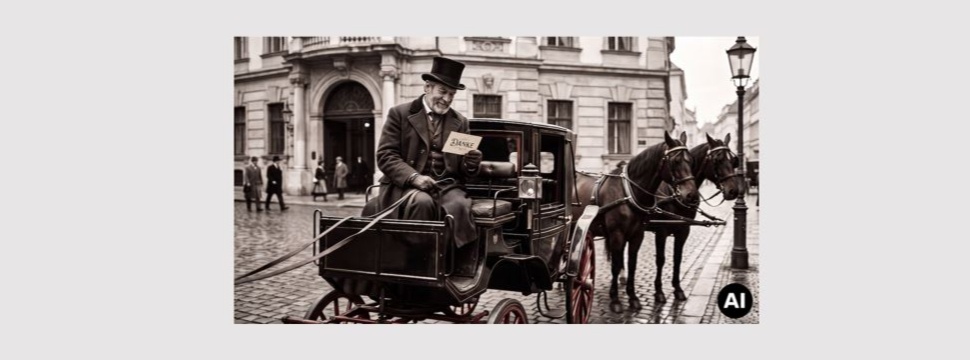
A dinner party at the home of a wealthy friend. In the past, after a successful evening, a verbal “thank you” was often not enough. A written note of thanks was considered a sign of good manners and was essential for expressing appreciation for the invitation.
The Culture of Visiting and Expressing Gratitude in High Society
In earlier times, when carriages and servants were part of the households of wealthy families, servants often handled the delivery of messages. Letters, invitations, and notices were delivered by them. This was also the case when expressing gratitude after an invitation.
The “Coachman’s Card”: A Linguistic Mystery
In the memoirs of Henny Walden one finds the term “coachman's card,” which is scarcely known today. Silke Schütze mentions this term in her book *Henny Walden: Memoirs of a Forgotten Soubrette*. The book sheds light on the 1920s, but the coachman’s card was already out of use by that time; it appears in the book as a wistful memory. By 1910, there were already more automobiles than carriages, suggesting that the “coachman’s card” was likely in use as far back as the late 19th century.
The “coachman’s card” was apparently a kind of thank-you card that the coachman delivered to the hosts following an invitation. Further sources on this term are rare today, making the “coachman's card” a minor linguistic mystery.
The End of a Tradition
Today, such customs have almost completely disappeared. The telephone, email, and messaging apps have replaced personal messenger services and revolutionized the way we express our gratitude. The “coachman’s card” thus remains a fascinating relic of a bygone culture of visiting and expressing gratitude.