Marked Cards: All About Markings, Strategies and Legal Aspects
News News blog
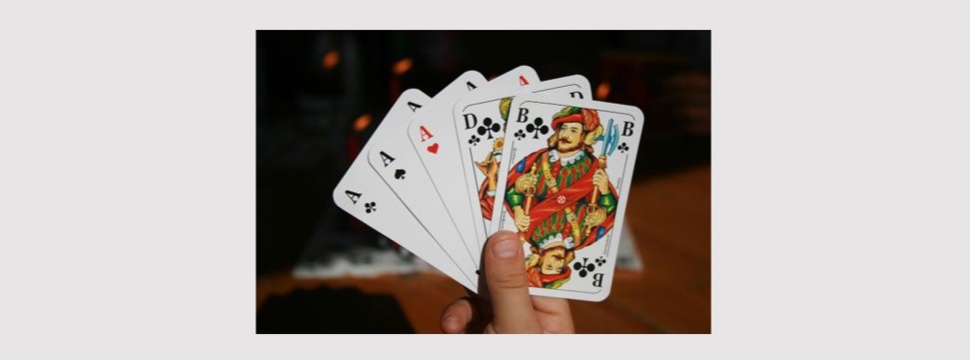
Marked cards are playing cards with inconspicuous markings that allow insiders to recognize the value of concealed cards. The term originates from "Rotwelsch," the argot of vagabonds and traveling craftsmen, who marked houses with so-called "Zinken" (marks) to pass information about the residents to those who followed. In the USA, such manipulated cards are known as "readers," "papers," or "doctored decks."
How are cards marked?
There are numerous methods to mark playing cards:
- Commercial cards can be marked on the back with light pencil strokes or scratches
- Machine-made cards often feature subtle alterations to the back pattern
- More modern techniques include "luminous readers" with special color markings that are only visible with polarized or red-filtering glasses
- Some cards use 3D effects, where the card value becomes visible through specific focusing
- In the 19th century, cheaters even filed down their fingertips to feel cards marked with tiny punctures
Who uses marked cards?
Marked cards are primarily used for two purposes:
- By cheaters during fraudulent card games played for money
- By magicians for astonishing card tricks
Interestingly, marked cards serve less to spy on other players' hands but rather help the dealer recognize to whom they are dealing certain cards or which card is on top of a stack.
Can you buy marked cards?
Yes, marked cards are actually available for purchase:
- Major US card manufacturers have been producing for cheaters' needs since 1830
- There is a legal market for such specialty cards, especially for magicians
- Cheaters often distribute manipulated cards by "forgetting" them at gaming locations or by selling innkeepers inexpensive card decks in bulk packages
Are marked cards illegal?
The legal situation is interesting:
- Using marked cards in games played for money constitutes fraud
- Manufacturing and selling them is generally legal
- However, trading them can potentially be considered aiding and abetting fraud
- In the USA, until the 1960s, sending marked cards through the US Postal Service was prohibited due to special postal regulations
How can you protect yourself from marked cards?
For games involving larger sums of money, it is recommended to:
- Regularly use new decks of cards
- In casinos, decks are continuously renewed or, as in Baccarat, used only once
- "Riffling" (quickly flipping through) the cards can sometimes reveal irregularities
- However, with professionally marked decks, detection is hardly possible even upon close examination
Marked cards remain a fascinating topic between fraud and magic - an area where dexterity, deception, and psychological skill come together.