What are tarot cards? History, meaning, and use explained
News News blog
Tarot cards have fascinated people for centuries. But what is behind these mystical cards with their symbolic images? Many people associate tarot exclusively with fortune telling, but the cards have a much more complex history.
The origins of tarot cards
Tarot cards originated in northern Italy in the 15th century. The first documented cards date from the period 1418-1425 and were originally called “trionfi.” These early card games originated in the princely families of the Este in Ferrara and the Visconti in Milan.
The word “tarot” itself first appeared in 1505 in both France and Italy. The origin of the word remains controversial – it could come from the French ‘tarotée’ (checkered) or from “tares” (dots on the backs of cards).
Playing cards or fortune-telling cards?
Originally, tarot cards were purely playing cards. Until the end of the 18th century, they were used exclusively for card games, similar to today's skat or poker cards. The tarot game became very popular internationally in the 18th century. Their use as fortune-telling cards only began in 1781, when the Swiss clergyman Antoine Court de Gébelin published the book “Le monde primitif.” He interpreted the symbols of the Marseille Tarot as signs of Egyptian mysteries—a theory that could not be scientifically proven.
Structure of the tarot cards
A complete tarot deck consists of 78 cards:
Major Arcana (22 cards): The trump cards with symbolic representations such as The Fool, The Magician, or The World. These cards represent universal life experiences and levels of consciousness.
Minor Arcana (56 cards): Four suits with 14 cards each – similar to normal playing cards. The suits are wands, cups, swords, and coins, which correspond to the four elements of fire, water, air, and earth.
The most famous tarot decks
Marseille Tarot: The oldest deck still in use, dating from the 16th century, with simple, colored woodcuts.
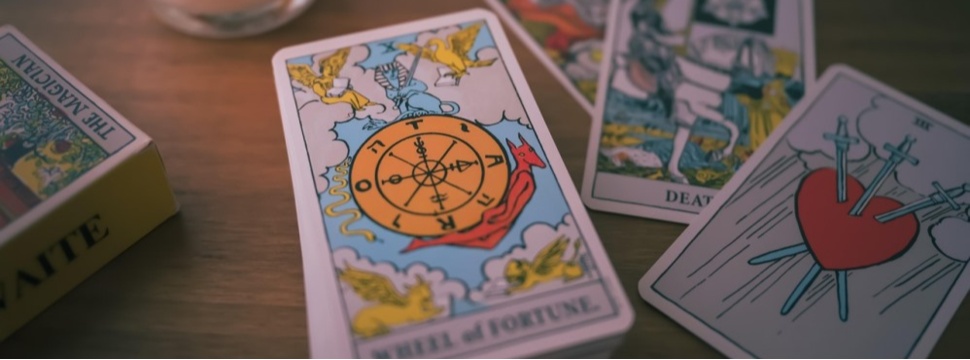
Rider-Waite Tarot: Developed in 1910 by Arthur Edward Waite and Pamela Colman Smith. This deck also illustrates the number cards scenically and is the most widely used today.
Crowley-Thoth Tarot: Created in the 1940s by Aleister Crowley and Lady Frieda Harris. It contains complex esoteric symbolism.
Modern use
Today, people mainly use tarot cards for:
• Self-reflection: The cards serve as a mirror of inner processes and feelings
• Psychological counseling: Some therapists use tarot as a projective technique
• Spiritual practice: Meditation and personal development
• Entertainment: Parlor game or card game
Most modern tarot practitioners do not view the cards as a tool for fortune telling, but rather as a tool for self-knowledge. The images stimulate associations and help to recognize unconscious thoughts and feelings.